Confidential working proposal
Sutton Coldfield / Birmingham, UK

Market Research, Market Testing & Development Approach

A staged programme to understand the market, test the concept with real consumers, observe actual behaviour, build local partnerships and reduce investment uncertainty before major capital is committed.

Project snapshot
~6,000 m²Proposed aquathermal footprint in a ~42,000 m² shopping centre, per client brief
~1,000 / dayPreliminary attendance target to pressure-test, not a forecast
7 stagesSecondary research through integrated market-entry strategy
01 · Proposed approach

Start with evidence. Then move quickly into the real market.

Collecting and analysing the available secondary data is the natural starting point. The UK has an unusually rich set of public and commercial sources that can help us understand the market before primary research and before substantial money is committed to a concept that still needs to prove itself.

1

Secondary evidence

ONS and Census, local authority research, VisitBritain, Sport England, transport and mobility sources, consumer spending, competitors, Companies House, search behaviour and industry research.

2

Primary consumers

Qualitative interviews and quantitative concept experiments with UK participants, focused on price, travel, positioning, product configuration, food and repeat visitation.

3

Real-world testing

On-site observation, a market-testing event, community participation and behavioural experiments to measure what people actually do rather than only what they say.

What the evidence needs to answer

Who is the realistic audience? How large is the effective catchment? What makes the proposition compelling? How far will people travel? What will they pay? Which mix of pools, steam, sauna, relaxation and food creates enough value to become a repeat habit? Can the location realistically support the preliminary target of roughly 1,000 visits per day?

The initial desk research can be completed in approximately two weeks. Additional commercial data such as CACI Acorn, CACI Retail Footprint, Experian Mosaic, or mobile-location data would add precision, but the project can move forward using public and lower-cost sources first. The objective is to purchase data only where an important gap remains.

02 · Primary research

Secondary data can describe the market. It cannot tell us whether people will choose the proposed experience.

The next step is direct research with potential customers. CloudResearch provides access to UK participants through Connect and broader international / geo-specific recruitment through Prime Panels. The proposal assumes approximately £5,000 remains available in the research account for participant recruitment.

Phase 1: exploratory interviews

Approximately 30–50 respondents covering current leisure and wellness habits, spa / pool / sauna usage, socialising patterns, family leisure, pubs and restaurants, travel willingness, reactions to the concept, terminology, pricing expectations and barriers.

Example: AI-led family interview ↗
Current primary research studies ↗

Phase 2: quantitative concept testing

Randomised concept and choice tasks rather than a simple “would you visit?” question. Variables can include admission price, travel time, positioning, adult vs family focus, food integration, memberships and quiet vs social experience.

CloudResearch sampling guidance
£29–£59Illustrative admission price test
15–45 minIllustrative travel-time test
3 framesThermal / Wellness / Day Resort
2 occasionsThermal visit and food-led visit
RepeatFrequency is central to the 1,000/day case

CloudResearch Connect currently supports country-level UK targeting and demographic targeting. CloudResearch identifies Prime Panels as the better fit for geo-specific and highly stratified one-time samples. The sampling plan should therefore be chosen after feasibility checks rather than assuming the Connect pool alone can supply a dense Sutton Coldfield sample. Connect targeting · Connect vs Prime Panels.
03 · On-site research

Online research is useful. Standing in the car park at 6 p.m. on a Friday tells you something different.

A short field visit gives context that is hard to infer from databases: who actually comes, how the property is used, where friction occurs, how the local leisure ecosystem feels and which organisations genuinely mobilise people.

  • Observe traffic and footfall at different times and across weekday / weekend periods.
  • Inspect entrances, parking, pedestrian flows, visibility and wayfinding.
  • Speak with shopping-centre visitors, tenants and front-line staff.
  • Visit relevant leisure, spa, restaurant and pub competitors.
  • Explore surrounding residential areas and community hubs.
  • Map local communication networks, influential groups and potential partners.

Network intelligence matters

One specific objective is to identify the high-leverage local nodes that can disseminate information: local authorities, neighbourhood groups, schools, sports organisations, senior groups, nonprofits, business associations, local media and trusted individuals. Royal Sutton Coldfield’s current regeneration plan identifies more than 420 community and voluntary organisations and 100+ sports groups, creating an unusually rich partnership environment.

Royal Sutton Coldfield regeneration plan
04 · Testing event

Turn the shopping centre into a live market laboratory.

Based on experience working with shopping centres, the proposal recommends a temporary event as one of the strongest mechanisms for testing a new project before committing serious capital. It creates a genuine reason to visit, then measures what actually happens.

Demand & traffic

Additional traffic generated, postcode origins, travel willingness, demographics, party composition, dwell time, repeat intent and early registration.

Marketing performance

Channel attribution, message performance, promotional cost, pricing reactions, offer framing and the ability to convert awareness into physical attendance.

Ecosystem building

Government relationships, community organisations, media, nonprofits, businesses, sponsors, operators and shopping-centre collaboration.

A well-designed testing event is not only promotion. It is research, traffic generation, stakeholder development, concept testing and early customer acquisition happening at the same time.

The recommended local format is a Family Recreation, Entertainment & Wellness Expo or Festival inside the shopping centre, with active wellness and recreation programming, food, community participation and a dedicated aquathermal concept-testing area. Every marketing channel can be tagged. Visitors can provide postcode, discovery source, party composition and selected behavioural measures. Different concept framings, price anchors and messages can be tested in the live environment.

Current example: NY Family Expo at Destiny USA

The proposal uses the NY Family Expo as an example of this method. The live event site currently lists the Expo for December 12, 2026 at Destiny USA’s Southeast Entertainment Wing in Syracuse, New York. The programme combines a Children’s Business Fair, goods / services / technologies for kids, family activity and entertainment zones, startups for children, educational and cultural programmes, career opportunities in children’s organisations, contests, workshops and interactive activities. It is designed both as a community event and as a way to learn how family traffic, marketing, partners and local stakeholder networks respond in a new region.

NY Family Expo — live market-testing example ↗
05 · Community co-creation

Do not simply introduce the concept to the community. Let the community help shape it.

In an established community, participation can be both a research method and a market-entry strategy. Interviews, workshops, polls, testing events and advisory activities can help local people influence amenities, terminology, food, relaxation areas, programmes and community uses.

The long-term communication goal is to move from:

“The shopping centre is bringing a new aquathermal complex to Sutton Coldfield.”

toward a more participatory story:

“Local residents helped define the experience they wanted, and the project responded.”

This logic is consistent with the well-known IKEA effect, in which successful personal effort can increase valuation of what people help create. The original research by Norton, Mochon and Ariely demonstrated increased valuation of self-made products, though the effect has clear boundary conditions and should not be used as a blanket claim that all participation creates advocacy.

Norton, Mochon & Ariely (2012)
06 · Behavioral insights

Test what changes behaviour, not only what people report.

The UK is an especially appropriate environment for this approach. The Behavioural Insights Team was established within the UK government in 2010 and describes itself as the world’s first institution dedicated to applying behavioural science to public policy, programmes and products.

Marketing

Wellness vs recreation, health vs social value, family vs adult messaging, social proof, images, community-origin messages and calls to action.

Traffic

Signage, entrance visibility, wayfinding, parking communication, routes through the centre and prompts connecting existing traffic to the proposed destination.

Pricing

Admission framing, family bundles, membership architecture, off-peak incentives, food-inclusive packages, anchors and monthly vs annual presentation.

Zoning

First impressions, order of experiences, quiet vs social areas, food placement, visible activity, decision points and choice architecture.

A focused field-experiment programme could use roughly one week for design, two weeks for implementation and several days for analysis. The testing event offers a natural environment in which different messages, layouts and offers can be compared with real behavioural outcomes.

Behavioural Insights Team history
07 · Decision framework

By the end, the team should have enough evidence to make an investment decision, not just a marketing presentation.

The programme deliberately combines different evidence types because no single method can answer the full commercial question.

Secondary market data

Population, demographics, spending, mobility, competitors, tourism and local context.

Primary consumer data

Choice, price, travel, concept fit, barriers, frequency and product configuration.

Observed behaviour

On-site patterns, event attendance, channel conversion, movement and response to interventions.

Stakeholder evidence

Partner capacity, community acceptance, institutional relationships and activation potential.

Investment question

Proceed, modify the concept, modify the pricing / product mix, modify the location, or reconsider the investment. The goal is to reduce uncertainty before the most expensive and least reversible decisions are made.

08 · Beyond traditional research

The opportunity is larger than producing another research report.

Many consultants can compile demographic tables, benchmark competitors and conduct a conventional survey. The proposed role is broader: use research to develop the market itself.

Research → community participation → concept development → partnerships → testing → behavioral experiments → marketing strategy → launch.

The purpose is to finish not only with evidence, but also with an emerging local ecosystem: early customers, advocates, partners, community relationships, better-tested messaging and a clearer market-entry plan. The proposal also suggests exploring whether one of the family-entertainment concepts under development could complement the wider property strategy where commercially and operationally appropriate.

09 · Briefly about me

Research, business, government, innovation and events.

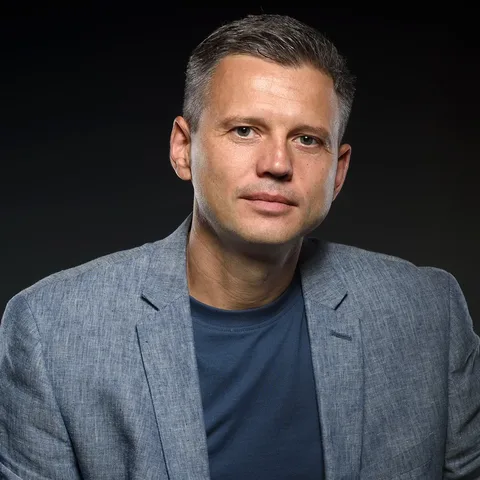
MG
Maksim Godovykh

I bring more than 20 years of leadership experience across business, government, research, innovation and global organisations.

  • I hold a Ph.D. in Hospitality Management from a top-ranked U.S. programme, along with master’s degrees in international economics, strategic management, data analytics, and an MBA. I have led more than a hundred research projects in consumer behaviour, hospitality, tourism, healthcare and public services, with numerous publications, presentations, citations and awards.
  • I previously served as Director of a government Business Development Administration overseeing approximately 190,000 organisations, and have held CEO and senior management positions across multiple industries, managing large teams and budgets and securing more than $50 million in funding.
  • I have developed and led innovation infrastructure supporting more than 1,000 startup and innovation projects, including incubators, accelerators, innovation hubs, funding programmes, commercialisation programmes, roadshows and strategic events.
  • I have organised more than 300 forums, trade shows, conventions, conferences, investment forums and other large-scale gatherings.
  • A substantial part of my experience is in stakeholder engagement and events. I have collaborated with government authorities, businesses, universities, NGOs, communities, international organisations, investors, researchers and industry associations across multiple countries.
  • I am currently working on developing a new generation of family entertainment concepts in the United States, including collaboration with shopping centres, research organisations, government bodies, communities, investors and families.
  • In normal life, I enjoy boats, aircraft, mountains and an active lifestyle related to sailing, piloting, skiing, snowboarding, swimming, cycling, running and hiking, preferably with my children.
10 · Suggested sequence

A staged programme where each step improves the next.

Stage 1 · ~2 weeks

Secondary market research

Build the evidence base, reconcile conflicting geographies and definitions, map competitors, establish a transparent demand framework and identify the remaining unknowns.

Stage 2

Online primary research

CloudResearch qualitative interviews followed by quantitative price, concept, travel and repeat-frequency experiments.

Stage 3 · 2–3 days

On-site research

Property observation, tenant and visitor conversations, competitor visits, neighbourhood exploration and stakeholder-network mapping.

Stage 4

Community & partnership development

Engage local authorities, community groups, nonprofits, media, businesses and potential sponsors.

Stage 5 · ~3 months preparation

Testing event

Family Recreation, Entertainment & Wellness Expo / Festival at the shopping centre, designed as both an event and research instrument.

Stage 6 · ~3–4 weeks

Behavioral experiments

Test marketing messages, pricing presentation, signage, traffic patterns and experience zoning.

Stage 7

Integrated market & marketing strategy

Combine all evidence into recommendations on positioning, concept design, pricing, targets, partnerships, launch strategy and realistic demand.

11 · US opportunities

A similar research-to-activation model can be used for underperforming U.S. shopping centres.

The proposal also opens the possibility of evaluating U.S. properties where new destination experiences, family entertainment, wellness and community programming could help reposition underused retail assets. The same principle applies: do not rely only on a feasibility spreadsheet. Test the market, build local relationships and learn before scaling.